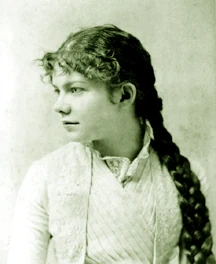
Amy Beach was born Amy Marcy Cheney in Henniker, New Hampshire, in 1867. A gifted young pianist, she made her professional debut in Boston in 1883 and appeared with the Boston Symphony Orchestra two years later. Her later identity as a composer grew alongside that practical knowledge of performance. Her piano training and her largely self-directed education in composition followed different paths; describing her simply as untrained obscures that distinction.[1][2][10]
Marriage to the physician H. H. A. Beach in 1885 changed the shape of her career. At her husband’s insistence, she sharply reduced public performing and concentrated on composition. Much of her music appeared under the name Mrs. H. H. A. Beach. That publishing name belongs to the history of her professional life, while her writing ranged well beyond the limited public role expected of her.[1][10][16]
Boston’s musical institutions helped bring her larger works before audiences. The Handel and Haydn Society performed her Mass in E-flat in 1892; the Boston Symphony Orchestra introduced her Gaelic Symphony in 1896. In 1900, Beach herself played the solo part in her Piano Concerto with the same orchestra. These were encounters between the composer, performing musicians and audiences, through which her work acquired a public life.[2][1][5]
After her husband died in 1910 and her mother in 1911, Beach renewed her activity as a concert pianist. She travelled to Europe, presenting her own music and developing her reputation as both performer and composer. The outbreak of the First World War ended that period abroad. Her career continued to move between the keyboard and the composing desk.[1][10]
Songs, chamber music, choral writing and piano pieces remained important parts of her work alongside the major orchestral scores. Later summers at the MacDowell artists’ colony offered sustained time for composing; encounters with birdsong there also entered her piano music. Beach participated in professional musical organisations and became a founding member and first president of the Society of American Women Composers in 1925. Her estate also supported MacDowell through income from her music.[1][2][13]
Beach died in New York in 1944. Manuscripts, correspondence and early editions now survive across several institutional collections, including the Library of Congress. Those materials offer routes back into a body of music that can be approached at many scales: through a single song, a violin melody, the concentration of a piano miniature or the unfolding of a symphony. Each offers a different meeting with the same musician.[1][2]